


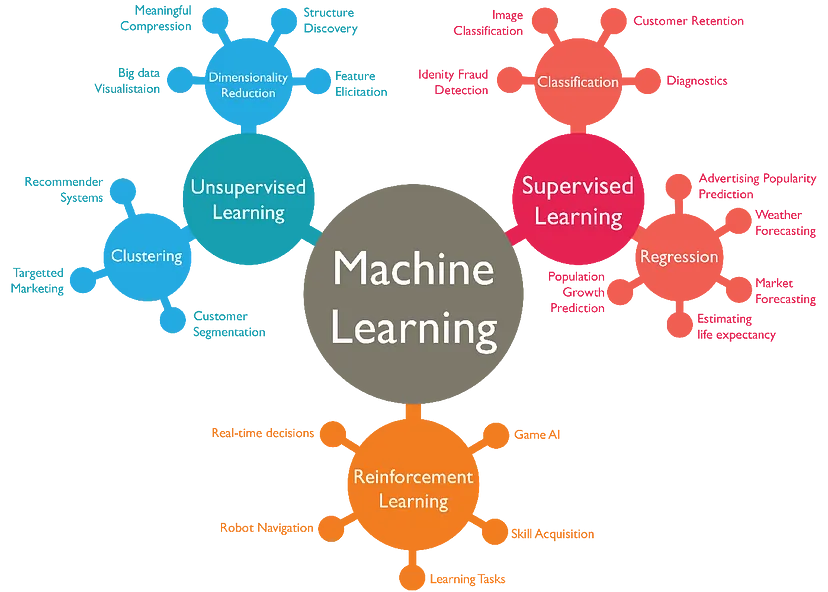
The modern Machine Learning Market Platform is a comprehensive, integrated environment designed to manage the entire, complex lifecycle of a machine learning model, from initial ideation to production deployment and ongoing maintenance. This is a far cry from the early days of ML, which often involved a disjointed collection of scripts and manual processes. Today's platforms, epitomized by services like Amazon SageMaker, Microsoft's Azure Machine Learning, and Google's Vertex AI, provide a unified "workbench" for data scientists and ML engineers. The platform architecture typically begins with data management capabilities. This includes tools for connecting to various data sources, performing data ingestion, and, crucially, tools for data preparation and labeling. Since the quality of a model is entirely dependent on the quality of its training data, these platforms provide services for cleaning data, handling missing values, and even managing human annotation teams to create the high-quality labeled datasets required for supervised learning. This foundational layer ensures that the "garbage in, garbage out" problem is addressed at the very start of the ML lifecycle.
The second and most computationally intensive layer of the platform is the model training and experimentation environment. This is the core "lab" where data scientists build and refine their models. The platform provides access to a wide range of computational resources, particularly clusters of powerful GPUs, which can be spun up on demand to train complex deep learning models. It offers hosted development environments, such as Jupyter notebooks, that come pre-configured with all the major ML frameworks like TensorFlow, PyTorch, and Scikit-learn. A key feature of this layer is experiment tracking. As data scientists train dozens or even hundreds of different model versions with varying architectures and hyperparameters, the platform automatically logs all the parameters, metrics, and outputs for each training run. This allows for systematic comparison and reproducibility, enabling teams to track what works, what doesn't, and to select the best-performing model for deployment. Many advanced platforms also include AutoML (Automated Machine Learning) capabilities, which can automate the process of model selection and hyperparameter tuning, making it faster and easier to arrive at a high-performing model.
Once a satisfactory model has been trained, the platform's third layer, the deployment and inference engine, comes into play. A trained model is useless until it is deployed into a production environment where it can make predictions on new, live data—a process called "inference." The platform simplifies this complex step by providing tools to package the model and deploy it as a scalable, secure API endpoint with just a few clicks. It handles the complexities of provisioning the underlying server infrastructure, managing containerization (using technologies like Docker), and ensuring the deployed model can handle a high volume of prediction requests with low latency. This MLOps (Machine Learning Operations) functionality is critical for bridging the gap between the experimental world of data science and the operational world of software engineering. It allows ML models to be treated as reliable, enterprise-grade software components that can be integrated into business applications, websites, and mobile apps.
The final and increasingly important layer of the machine learning platform is dedicated to monitoring, governance, and management. A deployed model is not a "fire-and-forget" asset; its performance can degrade over time due to a phenomenon known as "model drift," which occurs when the statistical properties of the live data change from the data the model was trained on. The platform provides monitoring tools that continuously track the model's predictive accuracy and watch for signs of drift. When performance degrades below a certain threshold, it can trigger alerts and even automate the process of retraining the model on new data. This layer also includes features for model governance, such as maintaining a central model registry, version control, and providing audit trails to ensure compliance and explainability. This end-to-end lifecycle management, from data to monitoring, is what distinguishes a true machine learning platform from a simple collection of tools, making it an indispensable foundation for any organization looking to operationalize machine learning at scale.
Top Trending Reports:

 English
 French
 Spanish
 Portuguese
 Deutsch
 Turkish
 Dutch
Dutch
 Italiano
 Russian
 Romaian
 Portuguese (Brazil)
 Tiếng Việt