


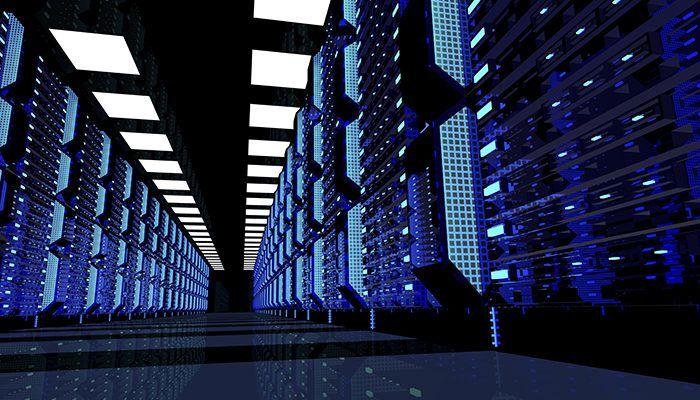
The global digital economy is built upon a physical foundation of immense scale and complexity, and at its core lies the data center colocation market. This sector represents a critical shift from businesses owning and operating their own data centers to leasing space, power, cooling, and connectivity from specialized third-party providers. This model allows organizations to convert significant capital expenditures (CAPEX) into predictable operational expenditures (OPEX), freeing up resources to focus on their primary business activities rather than on managing complex infrastructure. The fundamental value proposition of colocation is its ability to offer superior reliability, security, and scalability that most individual companies cannot achieve on their own. As businesses of all sizes accelerate their digital transformation journeys, the Data Center Colocation industry has become an indispensable enabler of cloud computing, big data analytics, and global connectivity. This market is not merely about renting physical space; it’s about accessing a rich ecosystem of network carriers, cloud providers, and other partners, creating a powerful hub for digital commerce and innovation that continues to expand at a rapid pace, reflecting its integral role in modern enterprise IT strategy and global data flow management.
The evolution of data center colocation has been a direct response to the changing needs of enterprise IT. Initially, it began as a simple real estate play, offering secure, powered "server hotels" for companies that outgrew their on-premise server closets. However, the advent of the internet and the subsequent explosion of data transformed the industry. Providers began to focus on creating highly connected environments, understanding that proximity to network carriers was as important as reliable power and cooling. The rise of cloud computing marked another significant inflection point. Instead of viewing the cloud as a competitor, savvy colocation providers positioned themselves as essential on-ramps to the cloud, offering private, low-latency connections to hyperscalers like Amazon Web Services (AWS), Microsoft Azure, and Google Cloud. This pivot created the hybrid cloud model, where enterprises could keep sensitive workloads in a private colocation environment while seamlessly connecting to public cloud services for scalability and flexibility. This strategic evolution cemented colocation's role not just as a space provider, but as a critical facilitator of modern, hybrid, and multi-cloud IT architectures, adapting continuously to technological advancements and the ever-increasing global demand for data processing and storage.
The colocation ecosystem is a diverse and interconnected web of players, each contributing a vital component to the overall service. At the top are the major colocation providers, such as Equinix, Digital Realty, and NTT, which operate vast global portfolios of data centers. These giants offer a wide range of services, from single cabinets to entire data halls, and are distinguished by their extensive interconnection platforms that bring together thousands of businesses, network service providers, and cloud platforms. Alongside these global leaders are numerous regional and local providers that cater to specific geographic markets or niche industry requirements, often offering specialized compliance or tailored customer service. The ecosystem also includes network carriers that provide the fiber optic connectivity into and between data centers, hardware vendors that supply the servers and networking gear, and software companies that develop Data Center Infrastructure Management (DCIM) tools. This symbiotic relationship ensures that customers within a colocation facility have access to a competitive and rich marketplace of services, fostering innovation and enabling them to build resilient and high-performance digital infrastructure that can scale globally.
Ultimately, the compelling business case for data center colocation rests on four key pillars: cost, performance, security, and scalability. From a cost perspective, it eliminates the immense upfront investment required to build a modern, resilient data center, which can run into tens or even hundreds of millions of dollars. Instead, customers pay a predictable monthly fee, simplifying budgeting and improving financial agility. Performance is enhanced through service level agreements (SLAs) that typically guarantee 99.999% uptime or higher, a level of reliability far beyond what most companies can afford to implement in-house. Colocation facilities also offer access to a dense ecosystem of networks, enabling lower latency and higher bandwidth. On the security front, providers implement multi-layered physical security measures, including biometrics, 24/7 monitoring, and mantraps, complemented by stringent operational processes and compliance certifications like SOC 2, ISO 27001, and PCI DSS. Finally, scalability is a core benefit; businesses can easily expand their footprint by adding more racks or power as their needs grow, without the lengthy and disruptive process of building new on-premise capacity, ensuring their infrastructure can keep pace with business demand.
Top Performing Market Insight Reports:
Artificial Intelligence Market

 English
 Arabic
 French
 Spanish
 Deutsch
 Turkish
 Dutch
Dutch
 Italiano
 Russian
 Romaian
 Portuguese (Brazil)
 Tiếng Việt