


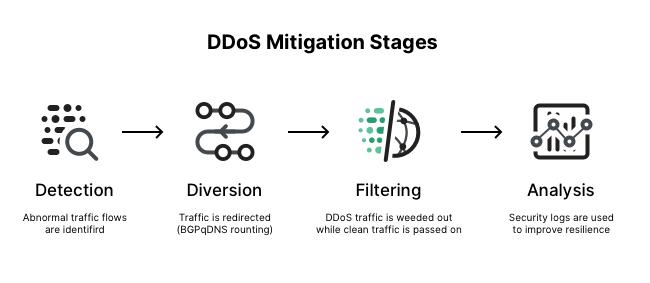
A modern, cloud-based DDoS mitigation platform is a marvel of global network engineering and sophisticated software. A complete DDoS Protection and Mitigation Market Solution is not just a single firewall but a globally distributed, multi-layered defense system designed to absorb and filter out even the largest and most complex attacks. This end-to-end solution is composed of several key architectural components: a massive global network, an intelligent traffic ingestion and detection layer, a high-performance scrubbing and mitigation engine, and a comprehensive user portal for visibility and control. Understanding the anatomy of this solution is key to appreciating how these providers can protect their customers from terabit-scale attacks while remaining completely transparent to legitimate users.
The foundation of any credible DDoS mitigation solution is its massive, globally distributed network. This is the "shield" that absorbs the brute force of a volumetric attack. The leading providers have built their own global networks with dozens or even hundreds of data centers (Points of Presence - PoPs) strategically located around the world. These networks have an enormous aggregate capacity, measured in the tens or even hundreds of terabits per second, far exceeding the scale of even the largest known DDoS attacks. By using technologies like BGP Anycast, the provider can announce the customer's IP addresses from all of its locations simultaneously, ensuring that an attack is distributed and absorbed across the entire global network, rather than overwhelming a single location.
The next critical layer is the traffic ingestion and attack detection engine. When a customer's traffic is directed to the provider's network, it first hits this intelligent edge layer. This is where the detection process begins. The system uses a combination of techniques to identify an attack. This includes simple rate-limiting and statistical analysis to spot sudden, massive spikes in traffic volume. More importantly, it uses advanced, AI-powered behavioral analysis to learn the "normal" traffic patterns for a specific application. It can then detect the subtle anomalies that signal a more sophisticated application-layer (Layer 7) attack, even if the traffic volume is not unusually high. This rapid and accurate detection is crucial for triggering the mitigation process before the attack can have an impact.
The heart of the solution is the high-performance scrubbing and mitigation engine. Once an attack is detected, the suspicious traffic is passed through a series of filters in the provider's "scrubbing centers." This is where the malicious traffic is separated from the legitimate traffic. The engine uses a variety of techniques, such as IP reputation filtering (blocking known bad IPs), protocol validation (dropping malformed packets), and challenge-response mechanisms (like a CAPTCHA, for web traffic) to validate the source. For Layer 7 attacks, it uses more sophisticated application-level analysis to distinguish bot traffic from human traffic. The "clean" traffic that passes through these filters is then forwarded on to the customer's origin server. This entire, multi-stage filtering process happens in milliseconds, ensuring minimal latency for legitimate users while the attack is being neutralized.
Top Trending Reports:

 English
 Arabic
 French
 Spanish
 Portuguese
 Deutsch
 Turkish
 Italiano
 Russian
 Romaian
 Portuguese (Brazil)
 Tiếng Việt