


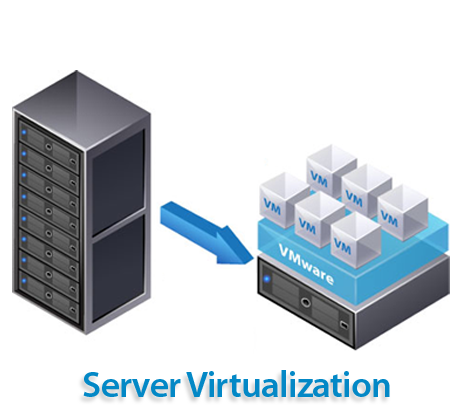
The concept of Server Virtualization has fundamentally revolutionized the way organizations deploy, manage, and scale their IT infrastructure, moving from a one-application-per-server model to a highly efficient, multi-tenant environment. At its core, this technology involves the use of a software layer called a hypervisor to abstract the server’s physical hardware—including its CPU, RAM, and storage—from the operating systems and applications that run on it. This allows a single physical server to host multiple independent virtual machines (VMs), each with its own operating system and applications, functioning as if it were a standalone machine. This innovation is the bedrock of modern data centers and cloud computing, and its market continues to see steady, mature growth. The global Server Virtualization Market is Estimated to Grow USD 14.57 Billion by 2035, Reaching at a CAGR of 4.43% During 2025 - 2035. This enduring relevance underscores its critical role in enabling business agility and operational efficiency.
The primary driver behind the widespread adoption of server virtualization is the profound impact it has on cost savings and resource utilization. Before virtualization, data centers were plagued by server sprawl, where dozens or even hundreds of physical servers would often run at a fraction of their total capacity, leading to wasted hardware, excessive power consumption, and a large physical footprint. By consolidating multiple workloads onto fewer physical machines, organizations can dramatically increase server utilization rates, often from a mere 5-15% to as high as 80%. This consolidation directly translates into significant capital expenditure (CapEx) savings from reduced hardware purchases and operational expenditure (OpEx) savings from lower power, cooling, and real estate costs. This compelling return on investment has made server virtualization a standard practice for businesses of all sizes, from small enterprises to global corporations seeking to optimize their IT budgets.
From a technological standpoint, the hypervisor is the key enabler of server virtualization. There are two main types of hypervisors. Type 1, or "bare-metal" hypervisors, run directly on the host's hardware, providing the highest levels of performance and security. Prominent examples include VMware ESXi, Microsoft Hyper-V, and the open-source KVM. These are the standard for enterprise data centers. Type 2, or "hosted" hypervisors, run as an application on top of an existing operating system, such as VMware Workstation or Oracle VirtualBox. While easier to install and use, they are typically reserved for desktop use, development, and testing environments due to the performance overhead of the underlying host OS. The choice of hypervisor is a critical decision that influences an organization's entire IT strategy, affecting performance, management capabilities, and overall cost of ownership.
The benefits of server virtualization extend far beyond simple consolidation and cost savings. It provides IT administrators with unprecedented flexibility and agility. Virtual machines can be provisioned in minutes, cloned for rapid deployment, or moved between physical hosts without any downtime using live migration technology. This greatly simplifies maintenance and load balancing. Furthermore, virtualization is a cornerstone of modern disaster recovery and business continuity strategies. Entire VMs can be replicated to a secondary site and brought online almost instantaneously in the event of a primary site failure. This ability to rapidly create, move, and recover workloads has transformed IT departments from slow-moving hardware managers into agile service providers, capable of responding quickly to the ever-changing demands of the business.
Explore More Like This in Our Regional Reports:
Canada Remote Infrastructure Management Market Size

 English
 Arabic
 French
 Spanish
 Portuguese
 Deutsch
 Turkish
 Dutch
Dutch
 Italiano
 Russian
 Romaian
 Portuguese (Brazil)