


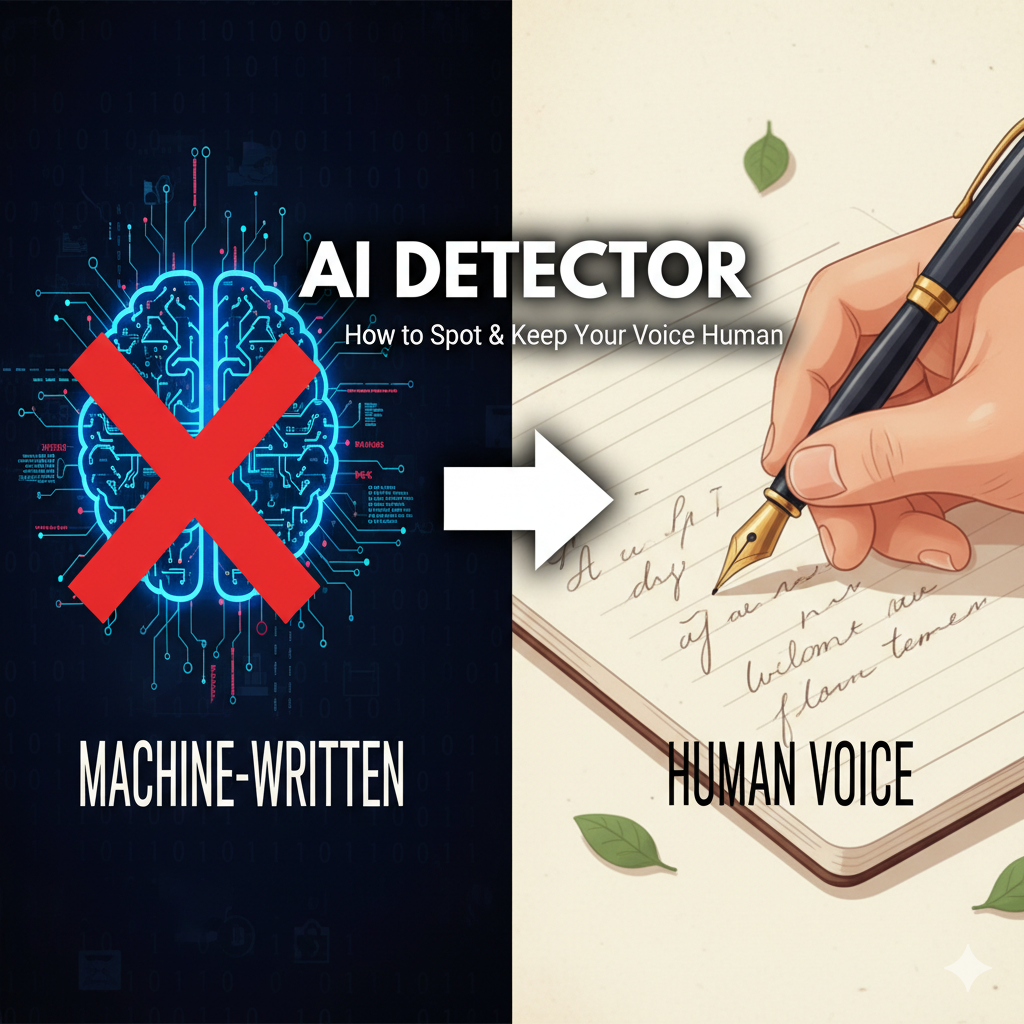
In a time when machines can write poems, draft reports, and answer complex questions within seconds, the line between human and automated writing is becoming increasingly blurred. As artificial intelligence tools grow more advanced, so does the need to distinguish between content crafted by people and text generated by algorithms. This is where an AI detector steps into the spotlight.
An AI detector is not just another tech trend. It is a powerful solution designed to analyze text and identify whether it was likely written by a human or produced by artificial intelligence. As digital communication continues to expand across blogs, academic papers, marketing materials, and social media, these detection tools are becoming essential for maintaining authenticity and trust.
Why the Rise of AI-Generated Content Demands New Solutions
Artificial intelligence writing tools have become widely accessible. From students drafting essays to businesses creating product descriptions, automated systems can now generate readable and persuasive text in seconds. While this innovation offers speed and convenience, it also introduces serious concerns.
Educational institutions worry about academic integrity. Companies question the originality of freelance submissions. Publishers seek to protect credibility. In this evolving environment, an AI detector functions as a safeguard. It offers clarity in situations where the origin of content matters deeply.
Without detection systems, it would be difficult to evaluate whether written work reflects genuine human thought or automated production. The increasing sophistication of AI-generated language makes manual identification nearly impossible. That is why detection technology has become so valuable.
How an AI Detector Analyzes Written Content
An AI detector does not rely on guesswork. It uses advanced computational models to examine patterns within a piece of writing. These systems evaluate factors such as sentence structure, word predictability, repetition patterns, and stylistic consistency.
Human writing often includes natural irregularities, emotional nuance, and varied sentence rhythms. AI-generated text, on the other hand, may display predictable phrasing or uniform structure. Detection tools measure these characteristics and assign a probability score indicating whether artificial intelligence likely produced the content.
Some detectors use machine learning models trained on massive datasets containing both human-written and AI-generated samples. By comparing new text against these patterns, the system can make informed predictions with increasing accuracy.
The Role of AI Detectors in Education
Academic institutions are among the most active adopters of AI detection technology. Teachers and universities face growing challenges as students gain access to advanced writing tools. While technology can support learning, misuse can undermine educational fairness.
An AI detector helps educators assess submissions more effectively. It provides insights into whether a paper may require further review. However, responsible use is crucial. Detection results should serve as indicators rather than final judgments. When combined with teacher evaluation and student dialogue, these tools support integrity without discouraging innovation.
Importantly, the purpose is not to punish technology use entirely. Instead, it encourages ethical integration of AI while preserving academic standards.
Business and Publishing: Protecting Brand Authenticity
Beyond education, businesses increasingly rely on AI detectors to maintain originality in marketing and content creation. Brands invest heavily in building a unique voice. If automated writing dominates their messaging without oversight, authenticity may suffer.
Publishing platforms also use detection systems to ensure quality control. Readers expect credible information, thoughtful analysis, and genuine storytelling. An AI detector helps editors verify that content aligns with their editorial standards.
In industries where trust drives reputation, distinguishing between human expertise and automated assistance becomes a strategic priority.
Limitations and Ethical Considerations
Despite their advantages, AI detectors are not flawless. Language models are constantly improving, making detection more challenging. False positives can occur, where human-written text is mistakenly labeled as AI-generated. Conversely, some automated content may evade detection.
Ethical concerns also arise. Overreliance on detection tools can create unnecessary suspicion. Writers who use AI responsibly for brainstorming or editing support should not automatically face penalties.
Transparency is key. Organizations should clearly communicate how detection tools are used and ensure decisions are not based solely on automated scores. An AI detector is most effective when used as part of a broader evaluation strategy rather than as a standalone authority.
The Future of AI Detection Technology
As artificial intelligence continues to evolve, detection systems must adapt. Developers are working to refine algorithms, improve accuracy, and reduce bias. The future may involve more sophisticated hybrid models capable of analyzing context, intent, and deeper stylistic signals.
At the same time, discussions about regulation and ethical guidelines are expanding worldwide. Policymakers, educators, and technology companies are exploring how to balance innovation with accountability.
Rather than viewing AI detectors as tools of restriction, society may come to see them as instruments of clarity. They support transparency in a digital landscape where content creation is increasingly automated.
Balancing Innovation with Responsibility
The growth of artificial intelligence in writing is neither entirely positive nor negative. It is transformative. AI tools can enhance productivity, assist non-native speakers, and spark creative ideas. Yet responsible use remains essential.
An AI detector plays a critical role in maintaining that balance. It does not aim to halt technological progress. Instead, it ensures that transparency and authenticity remain central to digital communication.
As the world navigates this new era of intelligent systems, the demand for reliable detection solutions will only increase. Whether in classrooms, newsrooms, or corporate offices, the AI detector stands as a digital truth seeker — quietly analyzing, verifying, and helping preserve trust in the written word.
In a future shaped by smart machines, clarity will be power. And the AI detector will continue to evolve as one of the most important guardians of digital authenticity.

 English
 Arabic
 Spanish
 Portuguese
 Deutsch
 Turkish
 Dutch
Dutch
 Italiano
 Russian
 Romaian
 Portuguese (Brazil)
 Tiếng Việt